
Concrete, despite its perceived solidity, is inherently porous. It acts much like a dense sponge, containing networks of capillaries and micro-cracks that allow water migration. For industry professionals and property owners alike, water ingress is not merely a nuisance; it is the primary catalyst for structural degradation, rebar corrosion, and freeze-thaw damage. The quest to permanently waterproof concrete is not just about keeping a basement dry—it is about ensuring the longevity of the infrastructure itself.
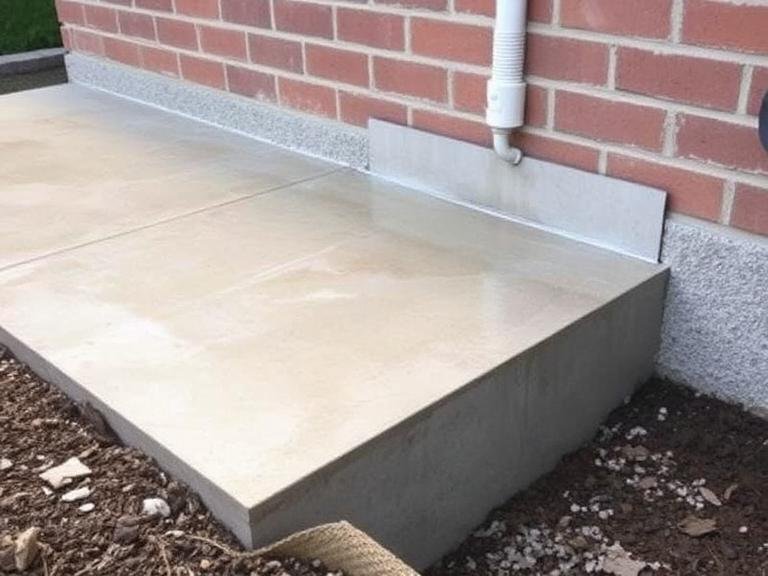
From our experience in the construction chemical sector, we have observed that “waterproofing” is often confused with “dampproofing.” The latter slows moisture; the former stops liquid water under hydrostatic pressure. To achieve a truly permanent solution, one must move beyond topical coatings that peel over time and look toward technologies that alter the chemical structure of the concrete or create an impermeable monolithic barrier. At Aoyalis, with our dedicated R&D team and 2,000㎡ production facility, we focus on solutions that integrate with the substrate rather than merely covering it.
In this comprehensive guide, we will analyze the five most effective methods to achieve lasting waterproof protection, evaluating their chemistry, application, and long-term viability.
- 1. Understanding Concrete Permeability
- 2. Method 1: Surface-Applied Crystalline Waterproofing
- 3. Method 2: Silane/Siloxane Penetrating Sealers
- 4. Method 3: Integral Crystalline Admixtures
- 5. Method 4: Flexible Cementitious Coatings
- 6. Method 5: Polyurethane Liquid Membranes
- 7. Summary Comparison of Waterproofing Methods
- 8. Manufacturer’s Insight: The Role of Quality Chemistry
- 9. Frequently Asked Questions
- 10. References
1. Understanding Concrete Permeability
Before selecting a method, it is crucial to understand the enemy. Water enters concrete through capillary action, hydrostatic pressure, and gravity. Permanent waterproofing requires blocking these pathways. Standard paints form a film on top, which is susceptible to delamination when vapor pressure builds up from within the concrete (negative side pressure). We recommend prioritizing methods that allow the concrete to “breathe” (release vapor) while blocking liquid water, or methods that become part of the concrete matrix itself.
2. Method 1: Surface-Applied Crystalline Waterproofing
Crystalline waterproofing is widely regarded in the industry as one of the only true methods to permanently waterproof concrete from the surface. Unlike a membrane that can tear, crystalline technology uses water as a catalyst to grow needle-like crystals deep within the concrete pores.
How It Works
When applied as a slurry to existing concrete, the active chemicals diffuse into the substrate. They react with unhydrated cement particles and free lime to form insoluble calcium silicate hydrate crystals. These crystals fill the capillaries and micro-cracks, blocking water passage even under high hydrostatic pressure.
Why We Recommend It
We recommend this method for retrofitting basements, tunnels, and foundations where you cannot access the exterior side. The beauty of this technology is its self-healing capability. If new hairline cracks form years later, incoming moisture reactivates the dormant chemicals, growing new crystals to seal the leak.
Product Spotlight: Aoyalis AY-2001
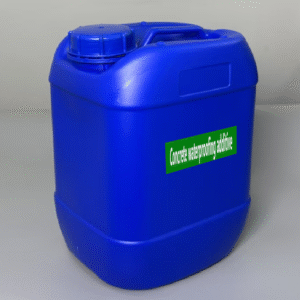
Our Concrete Waterproofing Material AY-2001 utilizes this advanced crystalline technology. It is engineered to penetrate deeply into the concrete matrix, ensuring that the waterproofing remains effective even if the surface coating is chipped or worn away. Because it becomes part of the structure, it lasts as long as the concrete itself.
3. Method 2: Silane/Siloxane Penetrating Sealers
For exterior surfaces exposed to weathering—such as driveways, bridges, and facades—creating a surface film is often a mistake. UV rays and vehicular traffic will degrade topical acrylics or epoxies. The superior alternative is a penetrating reactive sealer.
The Chemistry
Silane and Siloxane molecules are small enough to penetrate deep into the concrete pores. Once inside, they react chemically to line the pores with a hydrophobic (water-repellent) layer. This does not block the pores entirely; it leaves them open, allowing trapped moisture vapor to escape, which prevents freeze-thaw damage (spalling).
Application Best Practices
From our experience, the key to success here is saturation. The concrete must be clean and dry to allow maximum absorption. We typically advise using a high-quality concentrate that can be diluted to the specific needs of the project.
Our Water-based waterproof agent concentrate is designed for this exact purpose. It offers an eco-friendly, low-VOC solution that provides an invisible shield against water absorption, chloride ion ingress (from de-icing salts), and efflorescence. Unlike solvent-based sealers, it is safe for use in enclosed spaces and meets strict environmental regulations.
4. Method 3: Integral Crystalline Admixtures
If you are pouring new concrete, the most permanent solution is to make the concrete itself waterproof from the moment of batching. This involves adding crystalline chemicals directly into the ready-mix truck or batch plant.
Mechanism of Action
Similar to surface-applied crystalline systems, integral admixtures turn the entire concrete mass into a water barrier. This eliminates the need for labor-intensive surface membrane installation. It also removes the risk of workmanship errors associated with external membranes (e.g., poor seam sealing).
Advantages
- Cost-Effective: Reduces labor costs and construction time.
- Durability: The waterproofing cannot be damaged during backfilling or construction operations.
- Full Depth Protection: The entire slab is waterproof, not just the surface.
5. Method 4: Flexible Cementitious Coatings
While concrete is rigid, structures move. Thermal expansion, settling, and seismic activity cause movement that can crack rigid waterproofing materials. Flexible cementitious coatings bridge the gap between traditional slurries and elastomeric membranes.
Composition
These consist of a proprietary blend of cement, sand, and a liquid polymer additive (usually acrylic or latex). When mixed, they form a slurry that can be brushed or troweled onto the surface. Once cured, they form a tough, durable coating that maintains a degree of flexibility.
Ideal Applications
We recommend this method for water tanks, swimming pools, and areas subject to minor vibrations. Because these coatings are cement-based, they bond excellently to the concrete substrate, minimizing the risk of debonding that is common with sheet membranes.
6. Method 5: Polyurethane Liquid Membranes
For flat roofs, podium decks, and balconies where aesthetics and absolute impermeability are required, polyurethane (PU) liquid membranes are the industry standard. While arguably a “coating,” high-quality PU systems offer such longevity and elasticity (often over 300%) that they provide a near-permanent solution if maintained.
The Layered Approach
A typical system involves a primer, a base coat, a reinforcing fabric layer, and a UV-stable topcoat. This creates a seamless, monolithic rubber sheet over the concrete. Unlike penetrating sealers, this is a positive-side barrier.
Expert Tip: Polyurethane is moisture-sensitive during application. Ensure the concrete moisture content is below 5% before application to prevent blistering.
7. Summary Comparison of Waterproofing Methods
Selecting the right method depends on whether the structure is new or existing, and the specific environmental exposure.
| Method | Best For | Action Type | Permanence Level | Flexibility |
|---|---|---|---|---|
| Crystalline (Surface) | Basements, Tunnels, Retrofitting | Reactive / Penetrating | High (Self-healing) | Low (Rigid) |
| Silane/Siloxane | Driveways, Facades, Bridges | Hydrophobic Impregnation | Medium-High (10+ Years) | N/A (Subsurface) |
| Integral Admixture | New Construction Pours | Structural Modification | High (Life of Concrete) | Low (Rigid) |
| Flexible Cementitious | Water Tanks, Pools, Wet Rooms | Surface Barrier | High | Medium |
| Polyurethane Membrane | Roofs, Balconies, Decks | Surface Barrier | Medium-High | Very High |
8. Manufacturer’s Insight: The Role of Quality Chemistry
At Aoyalis, we believe that the effectiveness of any waterproofing project is 20% application skill and 80% product chemistry. With a 2,000㎡ production facility equipped with cutting-edge manufacturing technology, we ensure that every batch of our waterproofing agents meets rigorous consistency standards.
When dealing with crystalline technology like our AY-2001, the concentration of active catalytic chemicals dictates how deep the crystals will grow. Cheaper alternatives often use fillers that reduce efficacy. Similarly, for penetrating sealers, the solid content of the active silane determines the lifespan of the protection. Our Water-based waterproof agent concentrate is formulated to be diluted without losing the critical molecular density required for a permanent hydrophobic effect.
We recommend contractors and DIY enthusiasts alike to look beyond the price tag and evaluate the solids content and chemical basis of the waterproofing material. In the construction industry, a “cheap” waterproofing job is often the most expensive one, due to the high cost of failure and remediation.
9. Frequently Asked Questions
Can I apply crystalline waterproofing to painted concrete?
No. Crystalline chemicals require direct access to the concrete capillaries to penetrate. You must remove all paint, grease, oil, or curing compounds via grinding or shot blasting before application to ensure the chemicals can migrate into the substrate.
Is waterproofing from the inside (negative side) effective?
Yes, but only if you use Crystalline Waterproofing. Traditional membranes applied to the inside will be pushed off by the water pressure building up behind them. Crystalline products penetrate the concrete and block the water deep inside the wall, effectively turning the wall itself into the barrier.
How long does a silane penetrating sealer last?
High-quality silane/siloxane sealers typically last between 7 to 10 years, depending on traffic and UV exposure. Because they do not form a film, they do not peel, but the chemical bond eventually breaks down due to weathering, requiring reapplication.
What is the difference between damp proofing and waterproofing?
Damp proofing resists soil moisture but cannot stop liquid water under pressure. Waterproofing is designed to resist hydrostatic pressure. If you have a high water table or deep basement, damp proofing is insufficient; you must waterproof.
10. References
- American Concrete Institute (ACI) 515.1R-79: A Guide to the Use of Waterproofing, Dampproofing, Protective, and Decorative Barrier Systems for Concrete.
- British Standard BS 8102:2009 Code of practice for protection of below ground structures against water from the ground.