
A damp basement can be a homeowner’s nightmare, leading to mold growth, structural damage, and an unusable living space. As we enter 2026, the technology behind concrete coatings has evolved significantly, offering more durable and effective solutions than ever before. Choosing the best basement floor waterproofing paint is no longer just about aesthetics; it is a critical step in home maintenance that creates a moisture barrier against hydrostatic pressure.
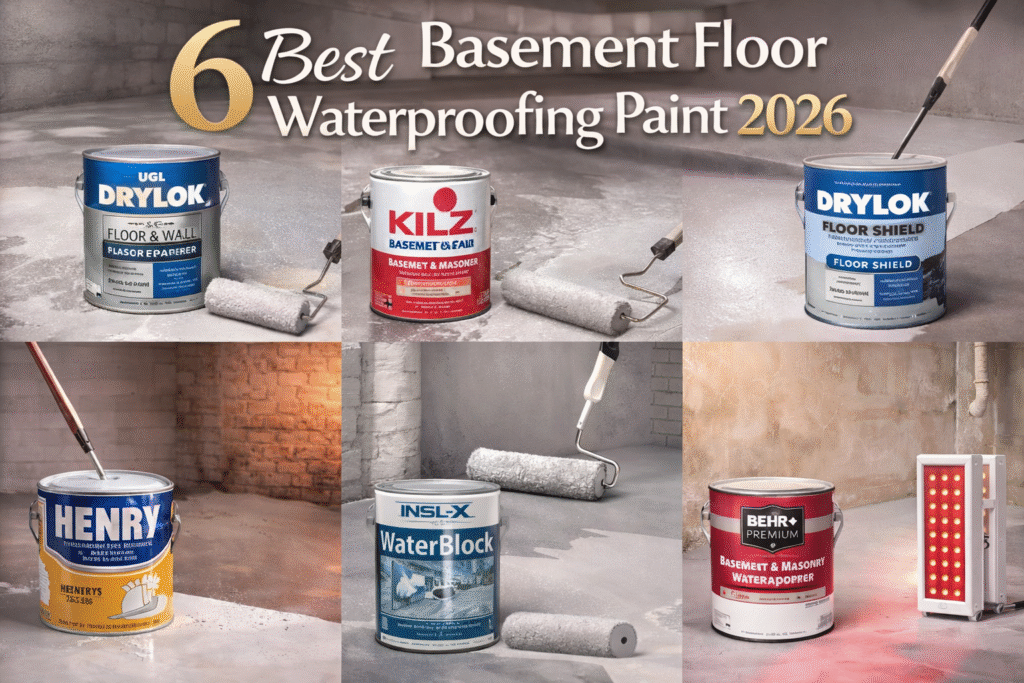
Whether you are finishing a basement for a new playroom or simply trying to stop the “musty basement smell,” the right floor coating can transform a dark, damp concrete slab into a clean, dry, and durable surface. In this comprehensive guide, we analyze the top-rated waterproofing paints and coatings available in 2026, focusing on durability, ease of application, and moisture resistance.
- 1. Aoyalis Swimming Pool Waterproof Coating AY-4025L
- 2. Rust-Oleum EpoxyShield Garage Floor Coating
- 3. DRYLOK Latex Concrete Floor Paint
- 4. KILZ Concrete & Garage Floor Paint
- 5. Liquid Rubber Foundation Sealant
- 6. Behr Premium Low-Lustre Enamel Floor Paint
- Buying Guide: Choosing the Right Waterproof Floor Paint
- Summary Comparison Table
- Frequently Asked Questions
- References
1. Aoyalis Swimming Pool Waterproof Coating AY-4025L

While originally designed for the extreme demands of aquatic environments, the Aoyalis Swimming Pool Waterproof Coating AY-4025L has emerged as a powerhouse solution for basements facing severe moisture issues. If your basement floor suffers from active seepage or high water tables, standard latex paints often fail. AY-4025L offers industrial-grade protection that withstands constant immersion, making it arguably the most robust waterproofing option on this list.
Swimming Pool Waterproof Coating AY-4025L
Key Features:
- High Water Pressure Resistance: Effectively withstands immersion up to 30m deep without leakage, offering unmatched protection against basement hydrostatic pressure.
- Eco-Friendly & Non-Toxic: Safe for fishponds and human contact, making it ideal for indoor basement environments where air quality is a concern.
- Heat & Cold Resistant: Stable performance under fluctuating temperatures, ensuring the coating won’t crack during seasonal shifts.
- Crack-Bridging Performance: Its elastic nature resists minor substrate movement and hairline cracks in concrete floors.
Application Scenarios:
AY-4025L is suitable for a wide variety of submerged and water-retaining structures, including swimming pools, fish ponds, and concrete reservoirs. For homeowners, it is the ultimate barrier for wet rooms, laundry areas, or basements prone to flooding.
Easy Application Methods:
AY-4025L is user-friendly and supports flexible construction techniques. Depending on the project scale, the coating can be applied by painting (for precise finishes), roller brushing (ideal for flat basement floors), or spraying (best for large areas). The product cures quickly and provides a seamless, pinhole-free waterproof membrane.
Technical Specifications:
- Product Name: AY-4025L Swimming Pool Waterproof Coating
- Brand: Aoyalis
- Coating Type: High-performance elastic waterproof coating
- Coverage: Approx. 1.5–2.0 kg/m² (two coats)
- Dry Time: Surface dry in 4 hours; Full cure in 48 hours
- Service Life: 8–10 years under proper maintenance
2. Rust-Oleum EpoxyShield Garage Floor Coating
For homeowners seeking a finish that looks professional and offers extreme durability, the Rust-Oleum EpoxyShield remains a top contender in 2026. While technically an epoxy rather than a standard paint, it is often grouped with the best basement floor waterproofing paint due to its superior moisture resistance and bond strength.
This 2-part water-based epoxy kit provides a surface that is harder and more durable than 1-part latex paints. It is particularly effective in basements that double as workshops, home gyms, or storage areas with heavy foot traffic. The chemical bond formed during the curing process creates a shield that resists moisture vapor, stains, and chemicals.
Pros:
- Professional glossy finish that is easy to clean.
- Superior resistance to abrasion and impact.
- Zero VOCs (Volatile Organic Compounds) in many formulations, safe for indoor use.
Cons:
- Requires precise mixing and application within a specific time window (“pot life”).
- Longer curing time before foot traffic is allowed.
3. DRYLOK Latex Concrete Floor Paint
DRYLOK is a household name in waterproofing, and their Latex Concrete Floor Paint is designed specifically for ease of use and effective moisture control. Unlike their famous wall masonry waterproofer (which is widely advised not to be used on floors due to traffic wear), this formulation is engineered to withstand foot traffic while decorating and protecting concrete floors.
This product is a “paint and primer in one,” which simplifies the application process significantly. It creates a non-slip, flat finish that helps disguise minor imperfections in the concrete. For basements that have mild dampness but aren’t subject to active leaks, this is a cost-effective and reliable choice.
Pros:
- One-step application (Prime & Paint).
- Low odor and easy soap-and-water cleanup.
- Available in various tints to match decor.
Cons:
- Not intended for waterproofing against active hydrostatic pressure leaks (use a dedicated sealer underneath if this is an issue).
- Flat finish may be harder to scrub clean compared to gloss epoxy.
4. KILZ Concrete & Garage Floor Paint
KILZ is synonymous with high-performance primers, and their Concrete & Garage Floor Paint brings that same reliability to floor coatings. This is a 1-part epoxy-acrylic formula, meaning it combines the ease of application of acrylic paint with some of the durability characteristics of epoxy.
It creates a tough, satin finish that resists scuffing, fading, and peeling. It is particularly good for basements because it is highly resistant to mildew and can handle the fluctuating humidity levels often found below grade. The satin sheen is a perfect middle ground—easier to clean than flat paint but less slippery than high-gloss epoxy.
Pros:
- Resistant to hot tire pickup (if used in garages) and general abrasion.
- Satin finish provides an elegant look for finished basements.
- Excellent coverage and hide for stained concrete.
Cons:
- Surface preparation is critical; acid etching is recommended for best adhesion.
5. Liquid Rubber Foundation Sealant
When aesthetics take a backseat to pure, unadulterated waterproofing, Liquid Rubber Foundation Sealant is the solution. This product is essentially a liquid coating that cures into a flexible, rubberized membrane. While often used on the exterior of foundations, it is an excellent choice for basement sub-floors where you plan to install a floating floor on top.
If you have cracks in your basement floor that shift slightly with the seasons, standard paints will crack. Liquid Rubber has high elasticity (elongation), allowing it to stretch and bridge those gaps without breaking the seal. It is water-based, solvent-free, and safe for indoor application.
Pros:
- Creates a seamless, flexible rubber membrane.
- Excellent for bridging cracks and joints.
- Environmentally friendly and non-toxic.
Cons:
- The finish is rubbery and not designed for high-traffic wear as a topcoat; best used as a sub-floor sealer or in utility areas.
- Long curing time.
6. Behr Premium Low-Lustre Enamel Floor Paint
For design-conscious homeowners, Behr Premium Low-Lustre Enamel Porch & Patio Floor Paint offers the widest range of custom colors. While it is not a “hydrostatic waterproofer” in the industrial sense, it is a highly durable concrete enamel that resists moisture damage, mildew, and scuffing.
This is the best basement floor waterproofing paint choice for dry basements where the goal is dust-proofing and decoration. The acrylic-latex formula is extremely easy to apply, dries quickly, and is widely available at major home improvement stores. It allows you to coordinate your floor color perfectly with your walls and furniture.
Pros:
- Thousands of custom color options.
- Resists mildew growth on the paint film.
- Very affordable and beginner-friendly.
Cons:
- Lowest moisture tolerance on this list; not for wet basements.
Buying Guide: Choosing the Right Waterproof Floor Paint
Selecting the right product for your basement depends heavily on the current condition of your concrete and your intended use of the space.
1. Assess Moisture Levels
Before painting, tape a 2×2 foot square of plastic sheeting to the floor. Leave it for 24 hours. If the concrete is dark or there are water droplets under the plastic, you have hydrostatic pressure issues. In this case, you need a heavy-duty proofer like Aoyalis AY-4025L or Liquid Rubber before applying a decorative topcoat.
2. 1-Part Paint vs. 2-Part Epoxy
- 1-Part (Latex/Acrylic): Easy to use, cheaper, easier to touch up. Best for low-traffic areas and DIYers.
- 2-Part (Epoxy): Requires mixing a resin and hardener. Harder, more durable, waterproof, but harder to apply. Best for gyms, workshops, and long-term durability.
3. Surface Preparation
No paint will stick to dirty or damp concrete.
Clean: Degrease the floor thoroughly.
Etch: Use a concrete etcher (mild acid) to open the pores of the concrete.
Repair: Fill cracks with hydraulic cement or a masonry crack filler before painting.
Summary Comparison Table
| Product | Type | Best For | Finish |
|---|---|---|---|
| Aoyalis AY-4025L | Elastic Coating | Extreme Waterproofing / Wet Areas | Custom/Light Blue |
| Rust-Oleum EpoxyShield | 2-Part Epoxy | Durability & Showroom Look | Gloss |
| DRYLOK Concrete Floor | Latex | Budget & Easy DIY | Flat / Non-Slip |
| KILZ Concrete & Garage | 1-Part Epoxy-Acrylic | General Purpose / Coverage | Satin |
| Liquid Rubber Sealant | Rubber Coating | Crack Bridging / Sub-floors | Rubber/Matte |
| Behr Premium Enamel | Acrylic Enamel | Custom Colors / Decoration | Low-Lustre |
Frequently Asked Questions
Generally, no. Wall waterproofers are formulated to hold back hydrostatic pressure but are not designed to withstand foot traffic. They will peel and chip quickly if walked on. Always use a product specifically labeled for “Floors.”
It depends on the product. Some paints, like DRYLOK Concrete Floor Paint, are self-priming. However, for most epoxies and enamels, using a dedicated concrete primer ensures better adhesion and longevity.
Standard latex floor paints typically last 2–5 years before needing a refresh. High-quality epoxies can last 10–20 years with proper preparation.
Paint can stop dampness, moisture vapor, and minor seepage. It cannot stop major flooding caused by cracks in the foundation or a high water table. Real water issues require sump pumps and exterior drainage solutions.