
For decades, interior designers, contractors, and homeowners have relied heavily on ceramic and porcelain tiles to protect bathroom walls from extreme moisture. However, modern architectural trends and significant advancements in chemical engineering have introduced a highly effective, seamless alternative. Today, opting to use Waterproof bathroom paint instead of tiles is not merely a cost-saving measure; it is a sophisticated design choice that offers superior hygiene, unparalleled aesthetic flexibility, and streamlined maintenance.
At Aoyalis, we are an industry-leading manufacturer and supplier of advanced waterproofing materials and stone chemical solutions. Operating a state-of-the-art 2,000 square meter production facility with cutting-edge equipment and a dedicated R&D team, we have extensively tested wall protection systems under the most severe humidity conditions. From our experience, selecting the correct Waterproof bathroom paint instead of tiles requires a deep understanding of moisture vapor transmission, substrate preparation, and polymer cross-linking. In this comprehensive guide, we will provide you with expert insights on how to successfully implement Waterproof bathroom paint instead of tiles for a durable, elegant, and mold-free bathroom environment.
Table of Contents
Why Choose Waterproof Bathroom Paint Instead of Tiles?
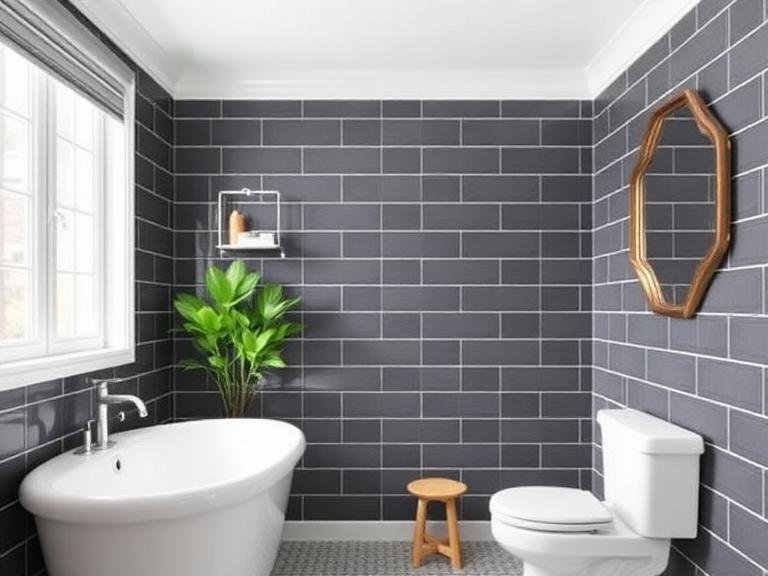
The traditional bathroom aesthetic has always been dominated by grid-like grout lines. While tiles themselves are impervious to water, the cementitious grout binding them together is highly porous. Grout acts as a sponge for ambient moisture, soap scum, and bacteria, inevitably leading to stubborn mold and mildew growth that requires harsh chemical cleaners and vigorous scrubbing. When you choose Waterproof bathroom paint instead of tiles, you eliminate these problematic grout lines entirely, creating a continuous, monolithic surface that is inherently easier to clean and sanitize.
Furthermore, utilizing Waterproof bathroom paint instead of tiles significantly reduces the structural load on your walls. Tiles are heavy and require extensive labor, specialized adhesives, and days of curing time. Conversely, a high-quality liquid-applied membrane and topcoat system can be installed in a fraction of the time. From a design perspective, Waterproof bathroom paint instead of tiles allows for infinite color customization. If you decide to update your bathroom’s color palette in five years, repainting is vastly more economical and less disruptive than a complete tile demolition.
Essential Factors to Consider
Not all paints are created equal. Standard interior acrylics will quickly blister, peel, and harbor mold when subjected to the daily steam of a hot shower. To successfully use Waterproof bathroom paint instead of tiles, you must select products specifically engineered for high-humidity environments. We recommend evaluating your options based on the following critical technical specifications.
Moisture and Mold Resistance
The primary function of any bathroom wall covering is to block liquid water and repel airborne vapor. When choosing Waterproof bathroom paint instead of tiles, the formulation must contain robust biocides and mildewcides. These active chemical agents prevent fungal spores from anchoring to the surface of the paint film. Additionally, the polymer matrix of the paint must be dense enough to prevent water molecules from penetrating through to the underlying drywall or plaster. At Aoyalis, our R&D team rigorously tests our coatings against sustained moisture exposure to ensure they maintain their structural integrity without softening or bubbling.
Durability and Scrubbability
Bathrooms require frequent cleaning. If you are applying Waterproof bathroom paint instead of tiles, the finished surface must be capable of withstanding regular abrasion from sponges and mild household detergents. We recommend selecting a satin, semi-gloss, or high-gloss finish rather than a matte or flat finish. Higher gloss levels indicate a higher concentration of binding resins relative to pigment, which creates a harder, slicker surface that sheds water and resists burnishing when scrubbed.
VOC Levels and Eco-Friendliness
Because bathrooms are typically small, enclosed spaces with limited ventilation, the emission of Volatile Organic Compounds (VOCs) during and after application is a major health and safety concern. High-quality Waterproof bathroom paint instead of tiles should comply with stringent environmental standards. As a leading manufacturer committed to sustainable building practices, Aoyalis formulates products that are low-VOC, ensuring that your indoor air quality remains pristine while still delivering industrial-grade moisture protection.
Aoyalis Solutions for Superior Wall Protection

Achieving a flawless, waterproof finish requires a systematic approach using compatible, professional-grade materials. At Aoyalis, we provide a comprehensive suite of products designed to work in synergy, ensuring that your decision to use Waterproof bathroom paint instead of tiles yields permanent, beautiful results.
- Waterproofing Materials: Our foundational products are designed to fortify the raw substrate, whether it is greenboard, cement backer board, or existing plaster.
- Waterproofing agent: From our experience, applying our deep-penetrating Waterproofing agent is the critical first step. It consolidates the surface, neutralizes alkalinity, and creates an impermeable chemical barrier that prevents underlying moisture from pushing the paint off the wall.
- Waterproof coating: Before applying the final color, we recommend using our highly elastic Waterproof coating. This elastomeric layer bridges hairline cracks and accommodates the natural thermal expansion and contraction of the building, ensuring the protective envelope remains unbroken.
- Waterproof paint: The final aesthetic layer. Our Aoyalis Waterproof paint is engineered with advanced resin technology, offering exceptional scrub resistance, vibrant color retention, and an impenetrable shield against shower steam and direct water splashes.
Step-by-Step Guide: Application Process
The success of Waterproof bathroom paint instead of tiles relies heavily on meticulous surface preparation and proper application techniques. Skipping steps will inevitably lead to moisture failure. Follow this professional workflow recommended by the technical experts at Aoyalis:
- Substrate Preparation: Begin by removing any loose debris, dust, or existing peeling paint. If you are applying Waterproof bathroom paint instead of tiles in an older bathroom, ensure that all mold is eradicated using a bleach solution, and patch any holes with a moisture-resistant joint compound. Sand the surface smooth.
- Apply the Waterproofing Agent: To guarantee adhesion and establish the first line of defense, apply a liberal coat of Aoyalis Waterproofing agent. Allow this to penetrate and cure completely according to the technical data sheet.
- Install the Membrane: For areas immediately adjacent to the shower or bathtub, roll on a thick, even layer of Aoyalis Waterproof coating. This step is non-negotiable if you want the system to perform as effectively as ceramic tiles.
- Apply the Final Paint: Once the undercoat is dry, apply two coats of Aoyalis Waterproof paint using a high-quality synthetic roller. Maintain a wet edge to avoid lap marks, and ensure adequate ventilation in the room to facilitate proper cross-linking of the paint polymers during the curing phase.
- Curing Time: We strongly recommend waiting at least 72 hours before using the shower. Exposing the new paint film to high humidity before it has fully cured can compromise its water-shedding properties.
Summary Table: Paint vs. Traditional Tiles
To assist architects, contractors, and property owners in making an informed decision, we have compiled a comparative analysis. Evaluating these metrics clearly demonstrates why transitioning to Waterproof bathroom paint instead of tiles is highly advantageous.
| Feature / Metric | Waterproof Bathroom Paint Instead of Tiles | Traditional Ceramic/Porcelain Tiles |
|---|---|---|
| Installation Cost | Highly cost-effective; requires fewer specialized tools. | Expensive; requires costly adhesives, grout, and skilled masonry labor. |
| Installation Time | Rapid application (typically 2-3 days including cure times). | Lengthy process (often 5-7 days including mortar and grout curing). |
| Maintenance & Cleaning | Seamless surface; easily wiped clean with mild detergents. | Grout lines require intense scrubbing and periodic resealing to prevent mold. |
| Aesthetic Flexibility | Infinite color options; easily repainted for future remodeling. | Permanent aesthetic; requires complete, messy demolition to change. |
| Weight Load on Walls | Ultra-lightweight; does not stress drywall or framing. | Very heavy; requires reinforced substrates like heavy cement backer boards. |
| Mold Resistance | High (when utilizing Aoyalis biocide-enhanced formulations). | High on the tile surface, but very poor within the porous grout lines. |
Frequently Asked Questions (FAQs)
From our experience, while high-quality waterproof paints are incredibly resilient, areas subjected to continuous, direct water volume and pooling (like shower floors and the lower half of shower stalls) still benefit from physical cladding. However, for the upper walls, ceilings, and all other bathroom areas, utilizing a robust system featuring Aoyalis Waterproof coating and Waterproof paint instead of tiles is highly recommended and perfectly suitable.
When the substrate is properly prepared using our premium Waterproofing Materials and Waterproofing agent, a high-quality waterproof paint job can easily last 7 to 10 years before requiring a touch-up. Regular cleaning with non-abrasive tools will significantly extend the lifespan of the finish.
If your goal is a smooth, continuous wall, the existing tiles must be removed and the drywall repaired or replaced. However, there are specialized bonding primers available that allow you to paint directly over existing, tightly adhered ceramic tiles, though this will not eliminate the visual texture of the grout lines. For the best architectural finish, we recommend starting with a fresh, smooth substrate.
Aoyalis is a dedicated manufacturer equipped with a 2,000 square meter facility and a specialized R&D team. We do not just make standard decorative paints; we engineer advanced chemical solutions for the construction and stone care industries. Our products are eco-friendly, rigorously tested, and trusted by professionals globally for severe moisture applications.
References
- Aoyalis Technical Data Sheets: Performance Metrics of Advanced Waterproofing Agents, 2026.
- Journal of Architectural Coatings and Polymeric Finishes: Analyzing Moisture Vapor Transmission in Bathroom Environments.
- International Building Code (IBC) Guidelines on Interior Wet Area Substrates and Membrane Systems.