
Subterranean moisture management is one of the most complex challenges in modern building maintenance and structural preservation. Property owners, facility managers, and construction contractors frequently encounter damp, musty below-grade environments and inevitably ask: should I use waterproof paint on basement walls? At Aoyalis, a leading manufacturer and supplier of waterproofing materials, waterproof paint, and advanced stone chemical solutions, we approach this question with decades of industrial expertise. From our experience operating a state-of-the-art 2,000-square-meter production facility with a dedicated R&D team, the answer is nuanced. While high-quality coatings offer exceptional benefits, understanding exactly when and how to use waterproof paint on basement walls is critical to achieving a dry, healthy, and structurally sound interior space.
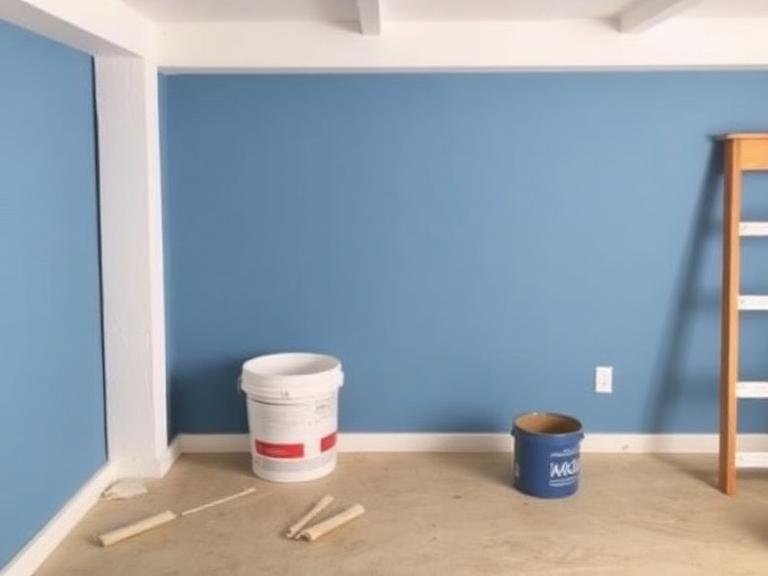
Basements are inherently prone to moisture intrusion due to their location beneath the soil line. Groundwater exerts hydrostatic pressure against the foundation, forcing water through microscopic capillaries, pores, and cracks in the concrete or masonry. If you simply use waterproof paint on basement walls to mask a severe structural leak without addressing the root cause, you will eventually face coating failure, peeling, and exacerbated water damage. However, when applied correctly as part of a comprehensive moisture management strategy, the decision to use waterproof paint on basement walls provides a formidable, aesthetically pleasing interior vapor barrier.
In this authoritative guide, we will dissect the science of foundation moisture, evaluate the ideal scenarios to use waterproof paint on basement walls, and detail the professional-grade solutions engineered by Aoyalis to permanently resolve subterranean dampness.
Table of Contents
- Summary Table: Waterproofing Methods Compared
- Understanding Hydrostatic Pressure and Capillary Action
- When to Use Waterproof Paint on Basement Walls
- When NOT to Use Waterproof Paint on Basement Walls
- Aoyalis Professional Waterproofing Solutions
- Crucial Surface Preparation Steps
- Expert Application Guide: How to Use Waterproof Paint on Basement Walls
- Frequently Asked Questions (FAQs)
- Industry References
Summary Table: Waterproofing Methods Compared
Before deciding to use waterproof paint on basement walls, it is vital to understand how it compares to other industry-standard moisture mitigation techniques. We recommend reviewing this summary table to align your specific water intrusion problem with the appropriate technological solution.
| Waterproofing Method | Primary Function | Best Application Scenario | Limitations |
|---|---|---|---|
| Interior Waterproof Paint | Acts as a vapor barrier on the interior face of the masonry. | Minor dampness, condensation control, aesthetic finishing. | Cannot withstand extreme hydrostatic pressure; will peel if the wall is actively leaking. |
| Crystalline Concrete Waterproofing | Penetrates deep into concrete capillaries to form insoluble crystals. | Active structural leaks, damp concrete blocks, and poured foundations. | Requires unpainted, bare concrete to penetrate effectively. |
| Exterior Excavation and Membrane | Stops water on the positive (outside) face of the foundation. | Severe, persistent flooding and major structural water ingress. | Highly invasive, requires heavy machinery, and is significantly more expensive. |
| Interior French Drain System | Collects water that enters the basement and pumps it out. | High water tables where exterior excavation is impossible. | Does not stop water from entering the walls, only manages it once inside. |
Understanding Hydrostatic Pressure and Capillary Action
To accurately determine if you should use waterproof paint on basement walls, you must first diagnose the mechanism of moisture intrusion. Concrete is a porous material. When the soil surrounding your foundation becomes saturated from heavy rainfall or poor yard drainage, the weight of the water creates hydrostatic pressure. This pressure literally pushes water against your foundation walls. Through capillary action, the water travels through the microscopic voids in the concrete until it reaches the interior surface of your basement.
When you use waterproof paint on basement walls, you are applying a negative-side waterproofing barrier. This means you are trying to hold the water back from the inside, against the force of the hydrostatic pressure pushing from the outside. Standard acrylic latex paints will blister and fail under this pressure within months. True waterproof coatings are formulated to bond tightly with masonry and withstand moderate pounds per square inch (PSI) of pressure. However, from our experience, even the most advanced elastomeric coatings cannot hold back a flowing river of water. This fundamental law of physics dictates when professionals choose to use waterproof paint on basement walls versus when they recommend deep-penetrating chemical treatments.
When to Use Waterproof Paint on Basement Walls
There are highly specific, advantageous scenarios where we recommend property owners use waterproof paint on basement walls. When properly specified, these coatings provide excellent utility and longevity.
Firstly, you should use waterproof paint on basement walls to combat general dampness and high humidity. If your basement walls feel clammy to the touch or if you notice mild condensation during the summer months, a high-quality waterproof coating acts as an exceptional vapor retarder. It prevents the slow migration of ground moisture into the basement air, drastically reducing the relative humidity and preventing the proliferation of mold and mildew spores.
Secondly, many facility managers use waterproof paint on basement walls to encapsulate minor efflorescence after the source of the moisture has been mitigated. Efflorescence is the white, chalky mineral deposit left behind when water travels through concrete and evaporates on the surface. Once the exterior grading is fixed and the walls are cleaned, a waterproof coating seals the surface, preventing future mineral blooming and providing a clean, bright, and easily washable surface.
When NOT to Use Waterproof Paint on Basement Walls
Conversely, our dedicated R&D team frequently cautions against attempting to use waterproof paint on basement walls as a “band-aid” for severe structural defects. If your basement features actively weeping cracks, visible trickles of water during rainstorms, or standing water on the floor, applying a surface coating will result in catastrophic failure. The hydrostatic pressure will simply build up behind the paint film until it forces the coating to bubble and peel away from the masonry substrate.
Furthermore, you should not use waterproof paint on basement walls that have been previously painted with standard oil or latex paints. Waterproof coatings require open, porous masonry to achieve a mechanical and chemical bond. Applying them over existing paint negates their ability to adhere to the concrete, rendering their waterproofing capabilities entirely useless. In these scenarios, complete removal of the old paint via mechanical grinding or chemical stripping is mandatory.
Aoyalis Professional Waterproofing Solutions
When the conditions exceed the capabilities of surface-level paints, structural intervention is required. At Aoyalis, we offer high-quality, durable, and eco-friendly products for professional use across the construction industry. Before you use waterproof paint on basement walls to achieve a finished look, we highly recommend treating the bare masonry with our flagship penetrating solution.
Concrete Waterproofing Material AY-2001

For basements suffering from active moisture migration, surface paints are insufficient. We recommend applying our Concrete Waterproofing Material AY-2001. This advanced formulation is not a surface paint; it is a deep-penetrating chemical treatment. When applied to damp concrete, the active proprietary chemicals in AY-2001 react with the free lime and moisture within the concrete capillary tracts. This reaction forms an insoluble crystalline structure deep within the concrete matrix, effectively plugging the pores and permanently stopping water intrusion from the inside out.
Unlike surface coatings that can blister and peel, AY-2001 becomes an integral part of the concrete structure itself. Once the AY-2001 has fully cured and the wall is demonstrably dry, you can then safely use waterproof paint on basement walls to achieve the desired aesthetic finish, knowing the hydrostatic pressure has been neutralized deep within the wall.
Comprehensive Building Envelope Protection

Water intrusion is rarely isolated to the basement. Comprehensive moisture management requires securing the entire building envelope. While our AY-2001 secures the foundation, we also manufacture the Heat Shield Paint for Roof – Advanced Thermal Insulation & Waterproof Coating. By sealing the roof against water intrusion and reflecting intense solar radiation, property owners can drastically reduce thermal expansion and contraction within the building structure, which in turn reduces the formation of foundation cracks that lead to basement leaks.
Crucial Surface Preparation Steps
If you have determined that your environment is suitable and you intend to use waterproof paint on basement walls, you must accept that the preparation phase dictates the success of the application. From our experience, ninety percent of coating failures are directly attributable to inadequate surface preparation.
First, remove all loose, flaking material, efflorescence, and existing paint using a stiff wire brush or a mechanical grinder. The concrete must be bare. Next, the masonry must be etched. We recommend washing the walls with a formulated masonry cleaner or a diluted muriatic acid solution. This process opens the pores of the concrete, creating a rough profile that allows the waterproof paint to physically anchor itself into the wall. After etching, the walls must be thoroughly rinsed with clean water to neutralize the acid.
Finally, inspect the walls for cracks, holes, and mortar joint deterioration. You cannot use waterproof paint on basement walls to bridge gaps larger than a hairline. All structural voids must be routed out and filled with a high-quality hydraulic cement. Hydraulic cement expands as it cures, creating a watertight plug. Only after the hydraulic cement has cured and the walls are clean should you begin the painting process.
Expert Application Guide: How to Use Waterproof Paint on Basement Walls
The methodology utilized to use waterproof paint on basement walls differs significantly from applying standard interior latex paint. Waterproof coatings are highly viscous and require specific application techniques to ensure a monolithic, pinhole-free barrier.
We recommend using a high-quality, stiff-bristled masonry brush for the first coat. Do not use a roller for the initial application. The stiff bristles are necessary to aggressively work the thick coating into every microscopic pore, pinhole, and mortar joint. If you merely roll the paint over the surface, you will trap air in the pores, leaving tiny gaps in the waterproof barrier where moisture can eventually escape.
Apply the first coat generously, ensuring complete coverage without excessive dripping. Allow the first coat to cure according to the manufacturer’s specifications—typically 12 to 24 hours. For the second coat, you may use a masonry roller with a thick nap (3/4 inch to 1 inch). Roll the second coat in a cross-hatch pattern to ensure uniform film thickness and to cover any brush marks left from the first pass. To successfully use waterproof paint on basement walls, the final cured film must be thick, continuous, and completely devoid of any bare concrete showing through.
Frequently Asked Questions (FAQs)
Can I use waterproof paint on basement walls that are currently wet?
No. You should never use waterproof paint on basement walls that have active, weeping water. The hydrostatic pressure will push the paint right off the wall before it has a chance to cure. For active leaks, you must first use a deep-penetrating crystalline treatment like Aoyalis Concrete Waterproofing Material AY-2001 or hydraulic cement to stop the flow of water.
How many coats are necessary when I use waterproof paint on basement walls?
From our experience, a minimum of two heavy coats is absolutely mandatory. The first coat must be brushed into the pores, and the second coat builds the necessary mil thickness to create a durable, continuous vapor barrier. Porous concrete blocks may even require a third coat to achieve a pinhole-free finish.
Is it necessary to remove old paint before I use waterproof paint on basement walls?
Yes. Waterproof masonry coatings must bond directly with the bare concrete or mortar. If you use waterproof paint on basement walls over existing standard paint, the waterproof layer will only be as strong as the old paint beneath it, leading to inevitable peeling and blistering.
Why do professionals use waterproof paint on basement walls if exterior excavation is better?
While positive-side (exterior) waterproofing is the ultimate solution, it is highly invasive and extremely expensive, often requiring the destruction of landscaping, driveways, and patios. Professionals use waterproof paint on basement walls, often in conjunction with interior drainage and penetrating sealers, as a highly cost-effective, non-destructive method to manage interior humidity and minor dampness.
“`
Industry References
1. American Concrete Institute (ACI). “Guide to Waterproofing and Dampproofing Concrete Systems.” 2023 Edition.
2. International Concrete Repair Institute (ICRI). “Best Practices for Surface Preparation of Concrete Substrates Prior to the Application of Protective Coatings.”