
Maintaining the structural integrity of a building starts at its lowest point: the foundation. As we enter 2026, the construction industry has seen a massive shift toward high-performance, eco-friendly, and smart solutions. Choosing the right foundation waterproofing supplies is no longer just about keeping water out—it is about managing hydrostatic pressure, preventing soil gas infiltration, and ensuring the longevity of the concrete itself.
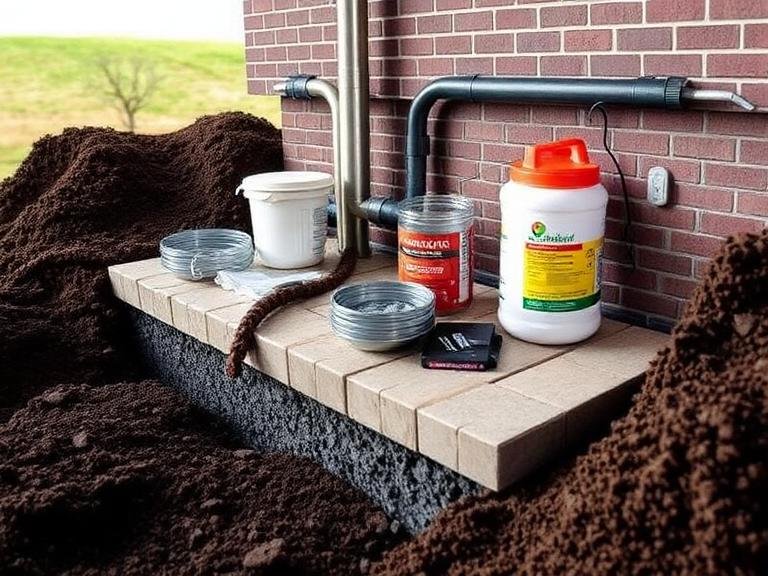
In this guide, we evaluate the top 8 foundation waterproofing supplies for 2026, ranging from advanced liquid rubber membranes to next-generation drainage mats. Whether you are a professional contractor or a homeowner planning a retrofit, understanding these materials is essential for a dry, healthy structure.
Table of Contents
- 1. The State of Foundation Waterproofing in 2026
- 2. Manufacturer Spotlight: Aoyalis Stone & Construction Chemicals
- 3. Liquid Rubber Foundation Sealants: The Elastic Powerhouse
- 4. Dimpled Drainage Mats: Managing Hydrostatic Pressure
- 5. Bentonite Clay Systems: The Self-Healing Natural Guard
- 6. Self-Adhered Bituminous Membranes: The Peel-and-Stick Standard
- 7. Cementitious Hybrid Coatings: Rigid Strength and Radon Blocking
- 8. Nanotechnology-Infused Waterproofing Agents
- 9. Blindside Waterproofing: Solutions for Urban Density
- 10. Polyurethane Injection Resins: The Ultimate Repair Supply
- 11. Summary Table of Waterproofing Supplies
- 12. Frequently Asked Questions (FAQs)
- 13. References and Industry Standards
1. The State of Foundation Waterproofing in 2026
In 2026, foundation waterproofing supplies have evolved beyond simple barriers. Modern engineering focuses on systems that adapt to building movement and environmental stressors. The primary driver of innovation is the increasing frequency of extreme weather events, which subject foundations to higher water tables and intense hydrostatic pressure. Consequently, the industry has moved toward redundancy—combining multiple layers such as a waterproof coating with a secondary drainage plane.
Sustainability is also a major factor. The market is shifting away from high-VOC solvent-based tars toward water-based, non-toxic elastomeric polymers. These newer foundation waterproofing supplies offer superior elongation (often exceeding 800%), allowing them to bridge cracks that form as a building settles over time.
2. Manufacturer Spotlight: Aoyalis
Aoyalis is a leading manufacturer and supplier of waterproofing materials, waterproof paint, and advanced stone chemical solutions. With a 2,000㎡ production facility, cutting-edge equipment, and a dedicated R&D team, they offer high-quality, durable, and eco-friendly products for professional use across the construction and stone care industries. Their focus on high-performance coatings makes them a top choice for contractors seeking reliable foundation waterproofing supplies in the modern market.
Core Product Range:
Aoyalis products are designed to meet the rigorous demands of both new construction and remediation projects, emphasizing long-term adhesion and environmental safety.
3. Liquid Rubber Foundation Sealants: The Elastic Powerhouse
Liquid rubber has emerged as one of the most popular foundation waterproofing supplies due to its ease of application and incredible flexibility. Typically applied by roller, brush, or industrial sprayer, liquid rubber cures into a seamless, monolithic membrane. In 2026, top-tier formulations like those produced by Liquid Rubber and Aoyalis offer over 900% elongation.
This flexibility is critical for exterior foundation walls. As soil freezes and thaws, foundations expand and contract. A rigid coating would crack, but a liquid rubber membrane stretches to maintain the seal. Furthermore, these coatings are often VOC-free, making them safe for crews to apply in confined excavations.
4. Dimpled Drainage Mats: Managing Hydrostatic Pressure
While coatings stop water from entering the concrete, dimpled membranes (often called dimple boards) manage the water that sits against the foundation. These foundation waterproofing supplies are made of high-density polyethylene (HDPE) and feature a vacuum-formed pattern of dimples. This pattern creates an air gap between the soil and the foundation wall.
By providing a clear path for water to flow down to the footing drain (French drain), these mats eliminate hydrostatic pressure. Without this pressure, the likelihood of water finding a way through even a minor defect in the primary coating is significantly reduced. In 2026, many drainage mats also incorporate a bonded geotextile filter fabric to prevent silt from clogging the air gap.
5. Bentonite Clay Systems: The Self-Healing Natural Guard
Sodium bentonite is a natural clay that swells up to 15 times its dry volume when it comes into contact with water. In foundation waterproofing supplies, this clay is usually sandwiched between layers of geotextile fabric or integrated into a sheet. When a leak occurs or a puncture happens during backfilling, the clay swells into the void, effectively “self-healing” the breach.
Bentonite is particularly favored for deep foundations and commercial projects where high water tables are a constant threat. It is one of the few materials that becomes more effective the more water it encounters, creating a dense, impermeable gel layer against the concrete.
6. Self-Adhered Bituminous Membranes: The Peel-and-Stick Standard
Often referred to by brand names like Bituthene or Mel-Rol, self-adhered bituminous membranes are the reliable “peel-and-stick” option for professionals. These sheets are manufactured to a consistent thickness (typically 60 mils), ensuring that there are no “thin spots” that might occur with a spray-on application.
These foundation waterproofing supplies consist of a rubberized asphalt layer laminated to a cross-laminated polyethylene film. They provide excellent resistance to punctures and chemical attacks from the soil. In 2026, winter-grade versions allow for installation in temperatures as low as 25°F (-4°C), extending the construction season for contractors in colder climates.
7. Cementitious Hybrid Coatings: Rigid Strength and Radon Blocking
Cementitious waterproofing is unique because it becomes an integral part of the concrete structure through a chemical bond. Modern hybrids combine the strength of cement with the flexibility of acrylic polymers. While not as elastic as liquid rubber, they are incredibly durable and resistant to abrasion.
An added benefit of these foundation waterproofing supplies is their ability to act as a barrier against radon gas. For projects in areas with high radon levels, a cementitious hybrid coating provides a dual-purpose solution—waterproofing and gas mitigation in a single application.
8. Nanotechnology-Infused Waterproofing Agents
The newest frontier in 2026 is the use of nanotechnology in waterproofing agents. Companies like Aoyalis are utilizing nanoparticles that penetrate deep into the pores of the concrete. Instead of just forming a skin on the surface, these agents change the surface tension within the concrete capillaries, making the material itself hydrophobic.
These foundation waterproofing supplies are ideal for “negative side” waterproofing (applying from the inside) or as a primer for other systems. Because they work at a molecular level, they are virtually invisible and do not alter the appearance of the stone or concrete, which is highly valued in architectural applications.
9. Blindside Waterproofing: Solutions for Urban Density
In high-density urban areas where property lines are close, there is often no room to excavate around a foundation to apply a coating. This is where blindside waterproofing is required. These foundation waterproofing supplies are installed against the shoring (the temporary wall holding back the earth) before the concrete foundation is poured.
When the concrete is poured against the membrane, it forms a mechanical bond. This is an essential technology for underground parking garages and zero-lot-line developments. In 2026, blindside membranes have become more robust, featuring “active” layers that swell to prevent lateral water migration between the membrane and the concrete.
10. Polyurethane Injection Resins: The Ultimate Repair Supply
No list of foundation waterproofing supplies would be complete without repair materials. When an existing foundation develops a crack, polyurethane injection resins are the surgical solution. These resins are injected into the crack under pressure. Upon contact with moisture, they expand into a closed-cell foam that fills every crevice of the crack.
Unlike epoxy, which is rigid and can re-crack if the foundation moves, polyurethane remains flexible. It effectively stops “running water” leaks instantly, making it a staple in every waterproofing contractor’s toolkit for remediation work.
11. Summary Table of Waterproofing Supplies
| Supply Category | Primary Benefit | Best For | Durability Rank |
|---|---|---|---|
| Liquid Rubber | 900%+ Elongation | New Foundations / DIY | High |
| Dimpled Mats | Hydrostatic Relief | High-Water Table Areas | Very High |
| Bentonite Clay | Self-Healing | Deep Commercial Pours | Extreme |
| Bituminous Sheets | Uniform Thickness | Critical Professional Specs | High |
| Aoyalis Nanotech | Deep Pore Penetration | Stone & Concrete Protection | Very High |
| Cementitious Hybrid | Radon & Water Barrier | Basement Interior/Exterior | High |
| Blindside Sheets | Tight Space Access | Urban Property Lines | High |
| PU Injection | Instant Leak Stop | Repairing Existing Cracks | Medium/Repair |
12. Frequently Asked Questions (FAQs)
13. References and Industry Standards
- ASTM D1227 – Standard Specification for Emulsified Asphalt Used as a Protective Coating for Roofing.
- International Residential Code (IRC) Section R406 – Foundation Waterproofing and Dampproofing.